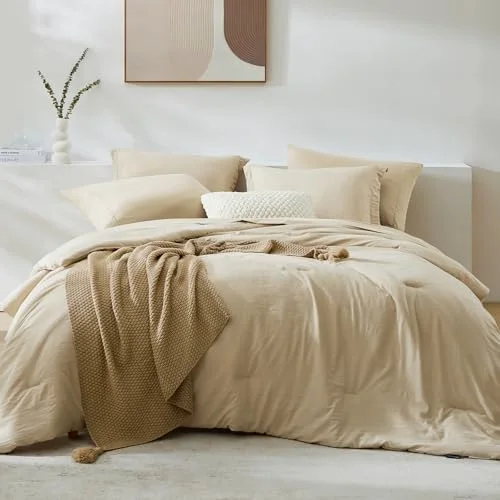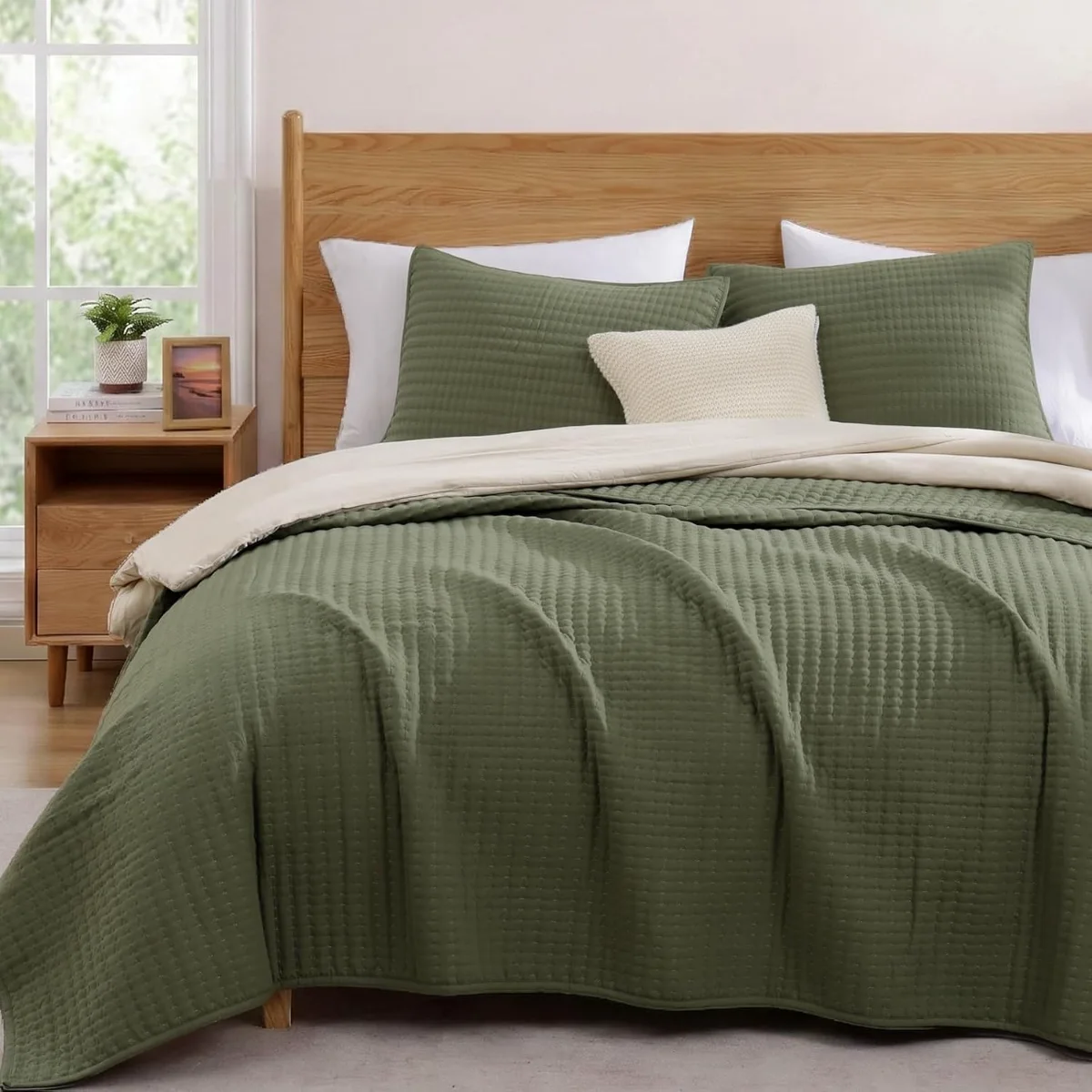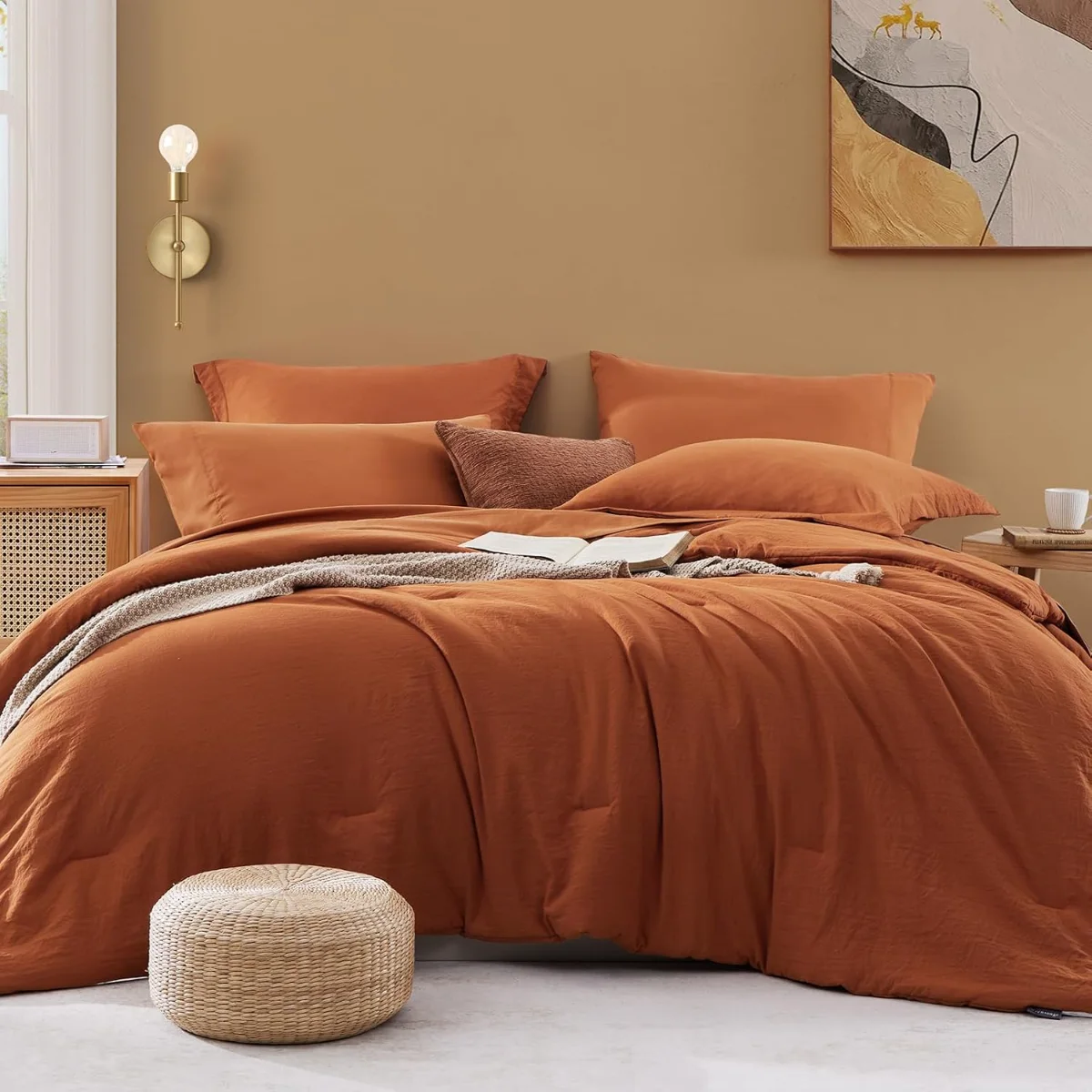
Ask ten people what microfiber is and you will get ten shrugs and one guess about polyester. The guess is right. Microfiber is polyester — sometimes with nylon — spun into filaments finer than a silk thread, then woven and brushed. The fineness is the whole point: more filaments per square inch means a denser, softer surface than the same weight of ordinary polyester could ever produce.
Cotton is a plant fibre with a hollow core and a natural twist. Those two facts explain almost everything cotton does well.
Below is the comparison as honestly as we can write it, including the rounds cotton wins. Everything we say about the synthetic side is measured against the fabric we actually sell, which is the brushed microfiber running through the whole Wrensonge bedding range.
| Brushed microfiber | Cotton (percale / sateen) | |
|---|---|---|
| Softness out of the bag | Soft immediately, especially prewashed | Percale starts crisp; softens over months |
| Breathability | Good, not best; traps more body heat | Better; the hollow fibre moves air and moisture |
| Warmth per ounce | Higher, warm at a lighter weight | Lower |
| Wrinkling | Barely wrinkles | Wrinkles, percale especially |
| Drying time | Fast | Slow |
| Colour retention | Excellent; holds dye through many washes | Fades sooner, particularly in dark shades |
| Price for the same look | Substantially lower | Higher, and rises steeply with thread count |
| Best for | Cool rooms, guest rooms, rentals, hard-wearing family beds | Hot sleepers, humid climates, heirloom bedding |
Where microfiber genuinely wins
It is soft on day one. Cotton percale needs a season of washing before it stops feeling like a hotel sheet. Microfiber does not, and prewashing at the factory — which every comforter and quilt in our catalogue gets — removes the sizing stiffness that new bedding otherwise carries. Our reviewers reach for the same word repeatedly, and it is not a word cotton earns in week one: soft.
It is warm without weight. A microfiber fill traps air in a way that lets a mid-loft comforter keep you warm through a 65-degree night while weighing very little. Sleep researchers put the ideal bedroom at about 65°F, with a recommended range of 65–68°F, and note that your comforter and sheets are part of staying in that range without sweating. A light, warm layer is precisely how you hit it.
It holds colour. Polyester takes disperse dye into the fibre rather than sitting on it. That is why a sage green microfiber comforter looks the same after thirty washes and a sage green cotton one has gone grey-green. It is also why we can promise that a quilt bought a year after the comforter set will still match it.
It knits well. The same fineness that makes a woven shell soft makes a knitted pile dense, which is the entire basis of the throw blanket range: a feather yarn that traps warm air at very little weight. Cotton throws exist, but they are either heavy or thin, rarely both warm and light.
It costs what it costs. Being direct: a seven-piece cotton bed in a bag with comparable finishing runs several times the price of a microfiber one. Anyone claiming their microfiber "feels just like 800-thread-count Egyptian cotton" is selling something. It feels like very good microfiber, and for most rooms that is the right trade.
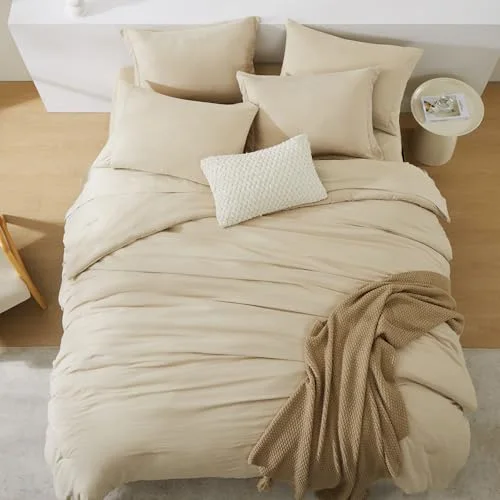
Where cotton genuinely wins
Hot sleepers. This is the honest one, and our own customers say it out loud. One four-star review of the flagship set reads: "My only complaint would be that it's not ideal for hot sleepers. The comforter feels like it traps your body heat." That is an accurate description of what polyester does. If you sleep hot, run a warm bedroom, or live somewhere humid in summer, cotton percale moves heat and moisture better and you should buy it.
Very long-term wear. Good cotton, laundered properly, gets better for a decade. Microfiber has a longer plateau than people expect but a shorter ceiling.
Natural-fibre preference. Some people simply want a plant fibre against their skin. That is a legitimate preference and no amount of specification changes it.
How to read the certification
The single most useful thing on a bedding label is not a thread count. It is whether the article carries OEKO-TEX® Standard 100 certification, which every fabric in our catalogue does.
In the standard's own words, certification means every thread, button and accessory of the article has been tested against a list of more than 1,000 harmful substances, and that the certified article is harmless to human health. Two details make it more useful than a generic "non-toxic" sticker:
- Requirements scale with skin contact. The more intensively a product touches skin, the stricter the class it must pass — and bedding sits in one of the stricter ones.
- The limit values are reviewed at least once a year, so a certificate reflects current toxicology rather than the state of knowledge whenever the product launched.
Thread count, by contrast, tells you almost nothing about microfiber, because the measurement was designed for cotton weaves and is routinely inflated by counting plies. Weight in GSM and the honesty of the construction description tell you far more.
What "prewashed" is actually doing
Prewashing is the least glamorous line on our spec sheet and one of the most consequential. New fabric arrives from the mill carrying sizing — a starch-like finish that protects yarn during weaving. It is what makes cheap new bedding feel papery. Washing it out at the factory means the fabric relaxes, reaches its final dimensions before it is cut and sewn, and arrives at its true hand.
It also means less shrinkage in your machine, because most of it has already happened. A comforter that has never been washed will move on you the first time; one that has been washed already will not.
Care, and the numbers behind it
Independent sleep guidance is unusually specific about laundry intervals, and our care advice follows it rather than inventing its own:
| Item | Interval | Water |
|---|---|---|
| Sheets and pillowcases | Once a week | Warmest the label allows |
| Duvet covers | Every 2 weeks to a month | Warm |
| Comforters and blankets | Every 2–3 months | Cold to warm, gentle |
One nuance matters for our fabric specifically. The guidance says to use the hottest water the label lists, and adds that while cotton generally handles hot water, polyester and similar materials should be washed on warm. Microfiber is polyester. So: cold or warm, gentle cycle, tumble dry low. Skip the fabric softener — it coats the fibre and works against the very loft you paid for.
There is a reason the interval for bedding is not "when it looks dirty". Bedding accumulates dust mites in numbers described as tens or hundreds of thousands, and regular washing is what keeps that population down. It is a hygiene schedule, not an aesthetic one.
The full construction and care detail for every fabric we sell is set out on our materials and production page, and the rules this catalogue follows when it prints a number are on how we keep this site honest.
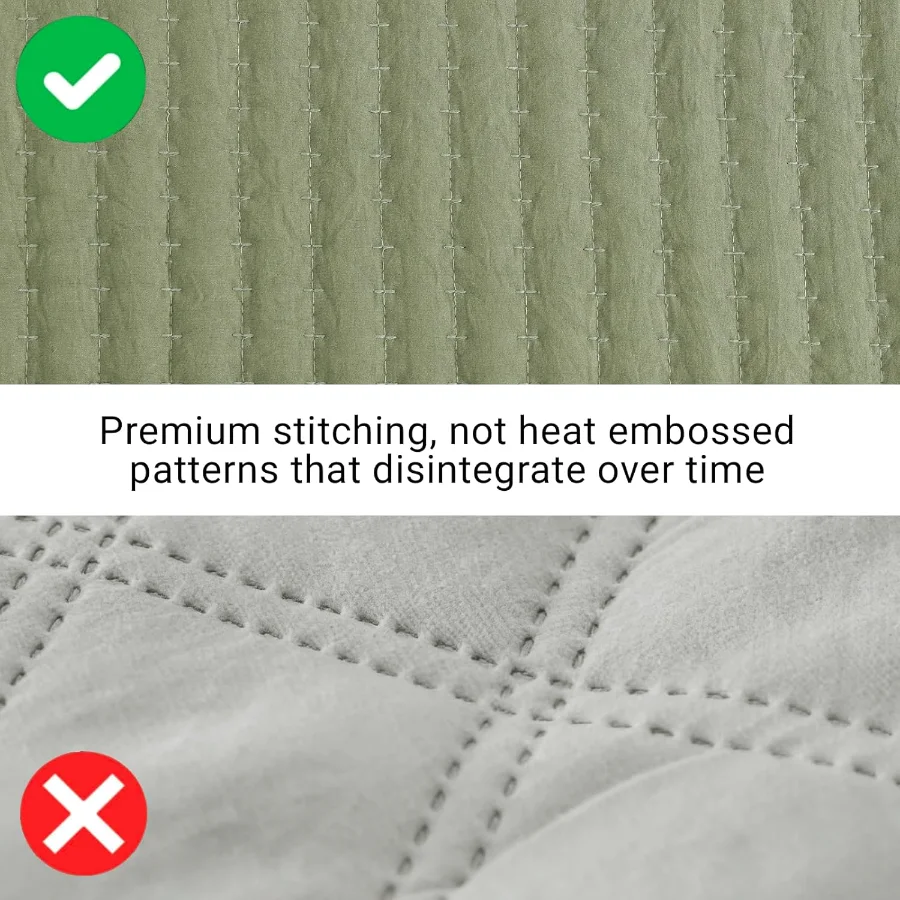
How microfiber is actually made
The name describes a thickness, not a material. A fibre qualifies as micro when it is finer than one denier, which in practice means finer than a strand of silk and dramatically finer than a human hair. Getting polyester that fine takes a step most people never hear about: the filaments are extruded together with a second polymer, then split apart, so a single extruded strand becomes many finer ones.
That splitting is the whole trick. Fineness multiplies surface area, and surface area is what produces the hand people describe as peachy or brushed. It is also what makes the fabric grab dust so well, which is why the same fibre technology ends up in cleaning cloths.
Brushed is a finishing step, not a fibre property. The woven cloth is passed over rollers carrying fine wires that raise a short nap. Raising the nap traps a thin layer of still air against the surface, which is why brushed microfiber feels warm to the touch immediately, before your body has warmed anything up.
The numbers that matter, and the one that does not
Thread count is the number everybody quotes and it is close to meaningless outside cotton percale and sateen. It counts threads per square inch, so a manufacturer can inflate it by using multi-ply yarns and counting each ply. A "1,800 thread count" microfiber sheet is a marketing artefact, not a measurement.
Two honest numbers replace it:
| Measure | What it tells you | Typical range in bedding |
|---|---|---|
| GSM (grams per square metre) | Fabric weight, so density and durability | 90–120 gsm sheeting; 200+ gsm for brushed throws |
| Denier / decitex | Fibre fineness; lower is finer and softer | Under 1.0 denier qualifies as microfiber |
| Fill weight | How much insulation is actually inside a comforter | Varies by loft; mid loft for all-season |
None of these appear on most packaging, ours included, which is a fair criticism of the whole category. What we can do is state the construction plainly: 100% brushed microfiber shell, prewashed, down-alternative fill at a mid loft, box stitched. Every one of those is checkable by the person holding the product.
Allergies, dust mites and the case for synthetics
This is the round where microfiber wins on a technicality that matters to a lot of households. Dust mites do not eat fabric; they eat shed skin, and they need humidity. A tightly woven synthetic gives them less to burrow into than a loose natural weave, and it dries faster, which matters because moisture is what sustains a colony.
None of that is a substitute for laundry. Bedding accumulates dust mites in numbers counted in the tens or hundreds of thousands, and washing on a schedule is the actual control. What the fibre buys you is a slower rate of accumulation and a faster dry, which makes the schedule easier to keep.
Down allergies are the other common driver. A down-alternative fill of the kind in every comforter we sell removes the question entirely.
The environmental part, said honestly
Polyester is a petroleum product and it sheds microplastics in the wash. Cotton is a plant but a famously thirsty one, and conventional cotton carries a heavy pesticide load. Neither fibre is clean, and anyone telling you otherwise is selling their own.
What we can say specifically: our fabrics carry OEKO-TEX® Standard 100, which is a human-health certification about what is in the textile, not a lifecycle claim about how it was produced. Conflating the two is one of the most common pieces of greenwashing in bedding, and we would rather name the limit than borrow the halo.
The most useful environmental lever available to a buyer is the boring one: keep bedding longer. A comforter that survives ten years of washing has a better footprint than three that each lasted three, whatever either was spun from.
When to replace what
| Item | Replace after | The tell |
|---|---|---|
| Sheets | 2–3 years | Thin patches at hip height; pilling that returns after every wash |
| Comforter | 5–10 years | Fill that stays flat after a tumble; cold spots in the corners |
| Quilt | 7–10 years | Stitching lines opening; piping fraying at a corner |
| Knitted throw | 5+ years | Loss of loft in the pile; snags that no longer sit back down |
Questions we get by email
Does microfiber pill?
Cheap microfiber pills badly, and it is the single best tell of a poorly made piece. Pilling comes from short, loosely spun fibres working free under abrasion. The defences are a tighter weave and a gentler wash cycle; the accelerants are overloading the machine, high heat and fabric softener.
Why does my new set smell of something?
It should not, and one of our reviewers explicitly noted hers "didn't smell like anything", which is the correct outcome and a direct consequence of prewashing. A chemical smell on new bedding usually means unwashed sizing. Wash it once before use and it will go.
Is microfiber hot?
Warmer than cotton at the same weight, which is exactly what you want in a 65-degree bedroom and exactly what you do not want at 74. See the four-star review quoted above: our own customer said it plainly, and we would rather print that than bury it.
Can I bleach it?
No. Chlorine bleach degrades polyester and will yellow a white set rather than whiten it. For stains, treat locally and wash warm.
So which should you buy?
Buy microfiber if you want a bed that looks finished the day it arrives, in a colour that survives the laundry, at a price that lets you own more than one set. That is what a Wrensonge comforter is built to do: our 7-Piece Bed in a Bag exists for exactly that buyer, and our 3-Piece Comforter Set for the one who already has sheets they like.
Buy cotton if you sleep hot, and do not let anyone talk you out of it.
Or do what a surprising number of our customers do: microfiber comforter, cotton sheets underneath. The comforter delivers warmth per ounce and colour that lasts; the sheets handle the part that touches you all night. Nobody who sells bedding is supposed to recommend a mixed bed. It is still the right answer for a lot of rooms.
Next in this series: how to layer a bed through the seasons without buying four sets of everything.
Sources opened and read on 2026-08-06: OEKO-TEX® — OEKO-TEX® Standard 100; Sleep Foundation — Best Temperature for Sleep; Sleep Foundation — How Often Should You Wash Your Sheets?.