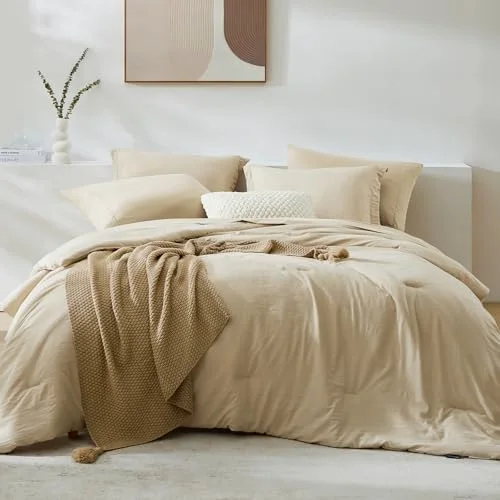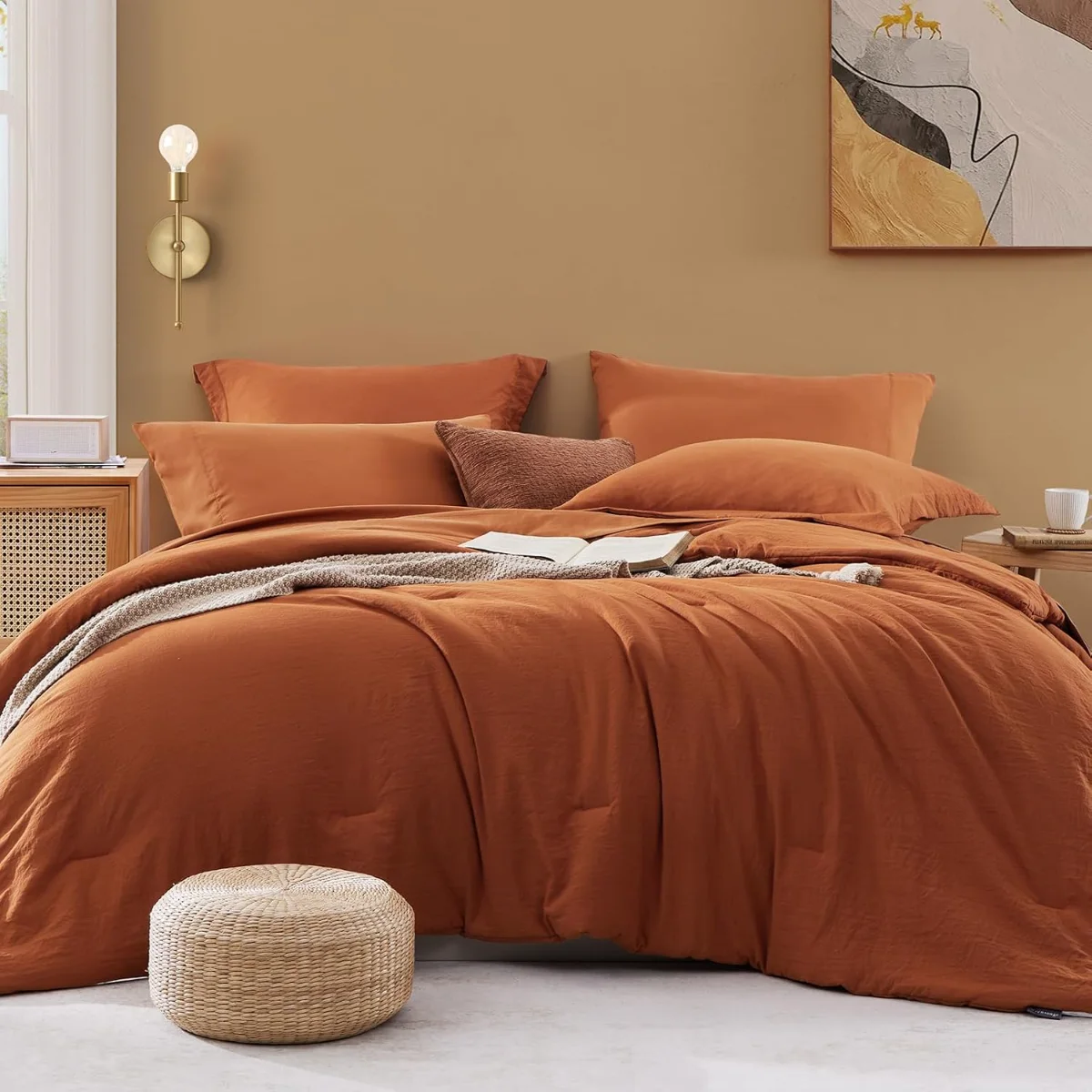
The seasonal-bedding industry would like to sell you a summer set and a winter set. Most homes do not have the storage for it and do not need it. What actually works is a stack: a base, a mid layer and a top layer, each of which can be added or removed independently. Get the stack right and the same four purchases run all year.
The target you are aiming at
Before layering, know the number you are layering towards. Sleep researchers put the best bedroom temperature at approximately 65°F (18.3°C), with doctors generally recommending a thermostat between 65 and 68°F. Your bedding's job is to hold you comfortable at that room temperature — not to compensate for a room you keep at 74.
This matters because the cheapest thermal upgrade in any bedroom is the thermostat, and the second cheapest is one removable layer. A heavier comforter is the expensive answer to a problem two dollars of electricity and a folded quilt solve better.
The four pieces
- Sheet set. Touches you all night; changes weekly. This is the layer to spend attention on, whatever fibre you choose.
- Comforter. The main insulator. Ours are mid-loft, sized for that 65–68°F window as the only layer.
- Quilt. The swing layer. Alone in summer, over or under the comforter in winter.
- Throw. The local fix for feet, shoulders, the couch, the person who runs cold in a household of people who do not.
All four exist in one palette across the Wrensonge blanket and bedding range, which is the practical reason a stack built this way still looks deliberate rather than accumulated.
Summer: sheet plus one
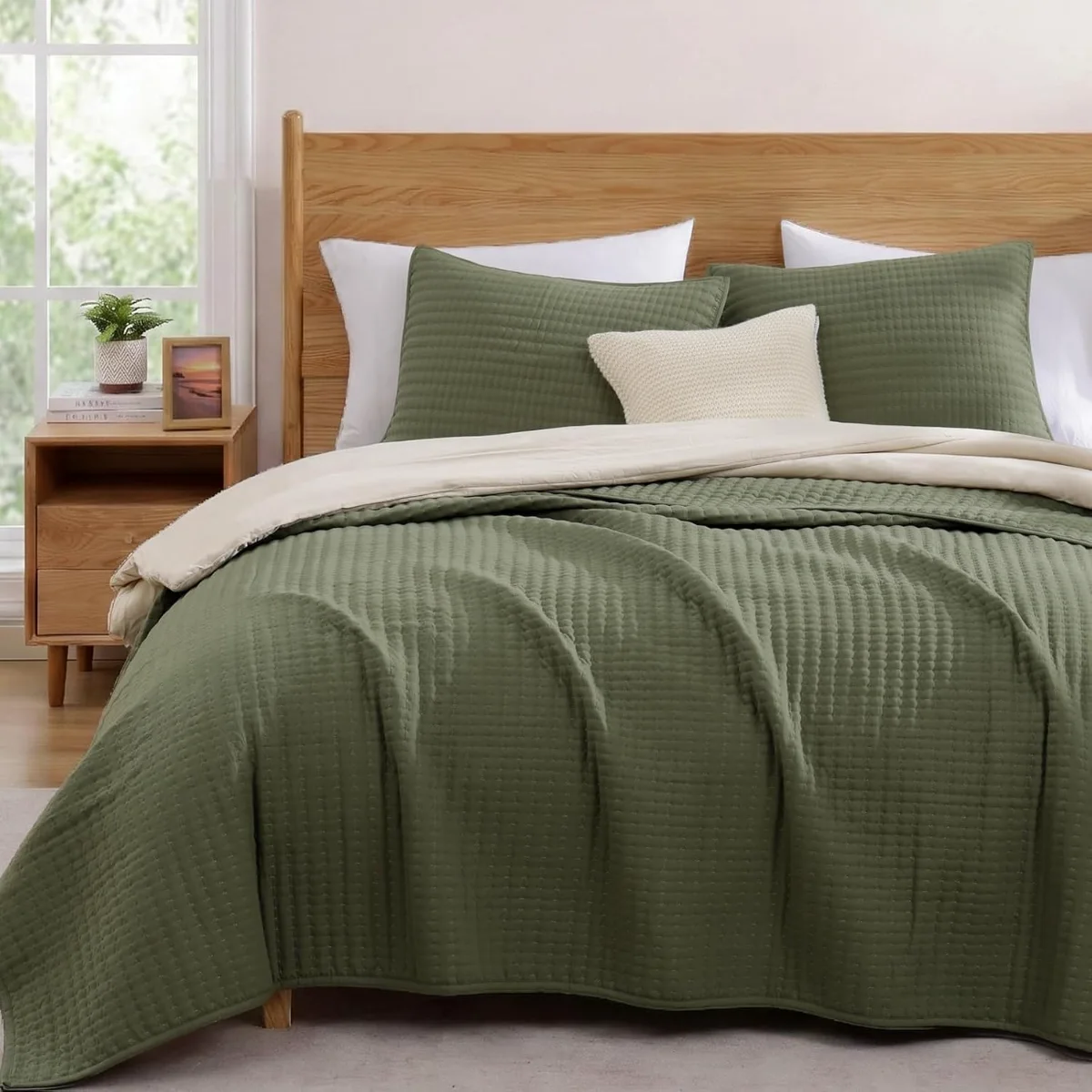
In July, most people over-bed. A fitted sheet, a flat sheet and a lightweight quilt is a complete summer bed in most of the country. Our Lightweight Quilt Set is built for exactly this: mid-weight prewashed fabric, square stitched, breathable enough to be the only cover on a warm night. One reviewer of the quilt described it as the "perfect weight for summer alone" — and said she would put a comforter over it in winter, which is precisely the system this guide is describing.
The comforter goes into storage, or folded at the foot of the bed for the hour after sunset when the room has not cooled yet.
If you sleep genuinely hot, this is also where the fabric conversation matters, and we set out the honest version of it in Microfiber vs Cotton.
Autumn: the comforter returns
The transition happens when the room stops holding heat overnight, usually a fortnight after you notice the mornings. Swap the quilt out for the comforter and keep the quilt folded across the foot of the bed. This is the classic three-quarter fold, and it is not decoration: it is a layer you can pull up at 4am without getting out of bed.
A 7-piece set makes the changeover trivial, because the sheets, shams and comforter are all from one dye lot and go on together. Ours is the 7-Piece Bed in a Bag.
Winter: stack, do not swap
The instinct in January is to buy a heavier comforter. Resist it for one season and try the stack instead:
- Sheets, as always.
- Comforter, as in autumn.
- Quilt over the comforter, pulled up fully.
- Throw across the foot for the person whose feet are cold.
Two thinner layers with air trapped between them outperform one thick layer of the same total weight, because the trapped air is doing the insulating. It is also adjustable at 3am, which a single heavy comforter is not.
| Season | Room | Base | Mid | Top |
|---|---|---|---|---|
| Summer | 68°F+ | Sheet set | Quilt | none |
| Spring / autumn | 65–68°F | Sheet set | Comforter | Quilt folded at foot |
| Winter | Below 65°F | Sheet set | Comforter | Quilt full, throw at foot |
| Guest room, any season | Any | Sheet set | Comforter | Throw, folded, as a welcome |
Where the throw earns its place
A throw is the layer people buy for looks and keep for function. It solves the household problem no comforter can: two people with different thermal preferences under one cover. One person gets the extra layer, the other does not, and nobody negotiates.
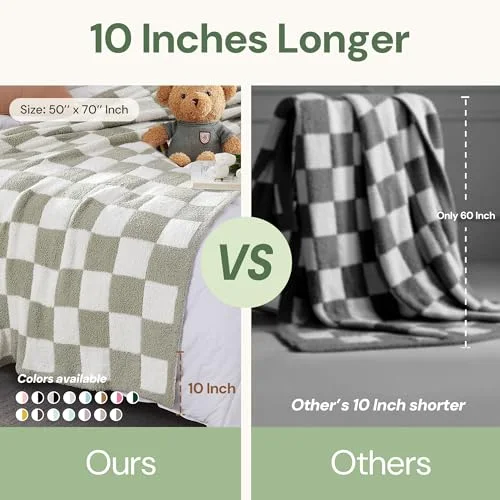
Cut matters here more than colour. A 50″ × 60″ throw covers one seated adult. A 50″ × 70″ covers two on a sofa or one tall person lying down. A 60″ × 80″ will cover a twin bed outright. Our Checkered Knit Throw and Reversible Knit Throw both run through that range; the Chunky Knit Throw is the sculptural one, hand-knitted, and lives on a chair as much as on a bed.
Two people, one bed, different thermostats
This is the most common bedroom problem in the country and the layering system is the only cheap answer to it. Splitting the top layer solves what no single comforter can: the warmer sleeper gets the quilt and the throw, the cooler one gets the comforter alone, and the bed still reads as one made bed from the doorway.
The practical version:
- Run the comforter across the full width, as normal. It is the shared layer.
- Fold the quilt lengthways and lay it over one side only. From the foot of the bed this reads as deliberate styling, not as a compromise.
- Keep a throw on the cold sleeper's side of the bed, over the corner.
The alternative — two separate covers, Scandinavian style — works too, and works better in genuinely extreme cases. It just requires buying two smaller comforters instead of one large one, which is a different shopping trip than this guide assumes.
Storing the layer that is off duty
Whatever is not on the bed needs to come back smelling of nothing. Three rules cover it:
- Store clean, never "one more use". Body oils oxidise over months and set into stains you cannot wash out later.
- Store dry, and give it air. A cotton storage bag or an old pillowcase beats a sealed plastic bin, which traps moisture against the fabric.
- Refold along different lines each season. Permanent creases start as repeated folds in the same place.
Our sets arrive vacuum-packed, which is a shipping convenience rather than a storage recommendation: the comforter needs about a day out of the bag to reach full loft, and it should not live compressed for months.
Why two thin layers beat one thick one
The claim earlier in this guide deserves its own explanation, because it is the mechanism the whole system rests on. Insulation is not really about the fabric; it is about still air. Fibres do very little insulating themselves. What they do is hold air in place so it cannot circulate and carry your body heat away.
Stack two covers and you get the air trapped inside each one plus a third pocket of air between them. That interface layer is free insulation, and it is why a comforter with a quilt over it outperforms a single comforter of the same combined weight.
The system has a second advantage the single heavy cover cannot match: it is adjustable in the dark, one layer at a time, by one person, without waking the other. Nobody has ever adjusted a heavy comforter halfway.
Layering by climate, not by calendar
"Summer" means very different things in Phoenix and in Minneapolis. The layers should follow the room, not the month:
| Climate | The core problem | What to run |
|---|---|---|
| Hot and dry | Heat, but cold nights | Quilt alone most of the year; comforter for winter only |
| Hot and humid | Moisture, not just heat | Sheets alone in summer; quilt as the only cover; consider cotton sheets under a microfiber cover |
| Cold winters | A long, genuinely cold season | The full stack from October; quilt over comforter, not under |
| Coastal or mild | Small swings, damp air | Comforter plus a folded quilt, unchanged most of the year |
| Air-conditioned all summer | The room is 68°F in August | Ignore the season and run the spring stack year-round |
The last row is the one people miss. If your bedroom is conditioned to the same temperature all year, your bedding does not have a season and you should stop pretending it does.
Layering the colours, not just the weights
A stack of three covers is three planes of colour visible at once, and the failure mode is a bed that reads as three unrelated purchases. Three rules keep it coherent:
- Let one layer lead. Usually the comforter, because it shows the most area. The others support it.
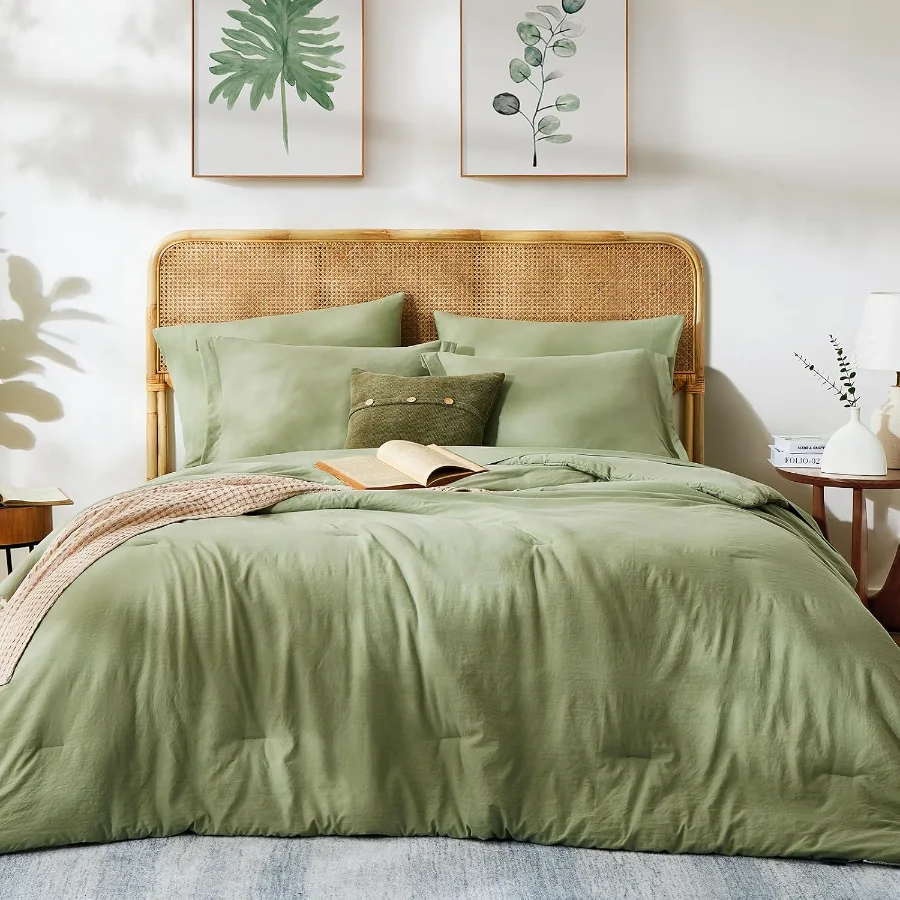
- Change value, not hue. A sage comforter with an oatmeal quilt works because they sit at different lightnesses in the same warm family. Sage with slate fights.
- Let the throw be the accent. It is the smallest area and the cheapest to replace, so it is the right place for the burnt orange or the checkerboard.
Our palette is built to make this easy: the sage, oatmeal, olive, plum and clay across the range are chosen to sit together in any pairing. If you would rather not think about it at all, the Matched Bundles shelf is exactly this decision, already made.
The guest bed, layered once and left alone
A guest bed has a different job: it must work for a stranger, in an unknown season, without being remade. The answer is to build the stack once and leave the top layer folded rather than deployed.
- Sheets on, comforter on, both smoothed.
- Quilt folded in thirds across the foot. Visible, reachable, not in the way.
- A throw over one corner of the chair, if there is one.
Your guest now has three thermal settings and does not have to ask anybody for a blanket at midnight. This is the single highest-return five minutes in guest-room preparation.
Kids, and the layer that ends up on the floor
Children kick. Whatever is on top will be on the floor by morning, so the top layer should be the one that survives the trip and washes easily. A knitted throw beats a quilt in a child's room for exactly this reason: it is smaller, machine washable cold, and it does not matter if it lands on a rug.
The corollary is to keep the actual insulation in the layer that stays put. A comforter that fits properly, with a modest drop so it cannot be dragged off by its own weight, does more for a warm child than a stack that ends the night in a pile.
Questions we get by email
Comforter over the quilt, or under?
Over the comforter for warmth, under it for looks. The quilt on top adds the interface air pocket and can be pulled up alone; the quilt underneath keeps the comforter as the visible layer. Both are defensible. Warmth argues for on top.
Do I need a duvet cover?
Not with our comforters — they are finished pieces, not inserts, and they wash as they are. Duvet covers exist to protect a down insert that cannot go through a domestic machine, which is a problem a washable down-alternative comforter does not have.
How do I stop the layers sliding apart?
Tuck the sides of the lower layer under the mattress by a hand's width and leave the top layer loose. The tucked layer holds position, the loose one moves with the sleeper, and they stop fighting.
What about the summer months in a guest room nobody uses?
Leave the bed made and covered. A made bed collects less dust than a bare mattress, and a quilt over the whole thing is a better dust cover than plastic, which traps moisture against the mattress.
The four-purchase bedroom
Put together, this is a complete year:
- A 7-piece set, which brings sheets, shams and comforter in one dye lot.
- A quilt in a colour that sits with it. That is the swing layer.
- A throw for the foot of the bed.
- A second sheet set, so laundry day never means an unmade bed.
That is four purchases and no seasonal storage crisis. If you would rather buy the pairs already matched, the Matched Bundles shelf exists for exactly that: a comforter set and the throw photographed with it, in one decision. The whole of Wrensonge Home & Design is built to be shopped that way, one palette at a time.
And if you are still working out which sizes to buy before any of this, start with the size guide — the drop calculation there decides more about how a layered bed looks than any of the choices on this page.
Sources opened and read on 2026-08-06: OEKO-TEX® — OEKO-TEX® Standard 100; Sleep Foundation — Best Temperature for Sleep; Sleep Foundation — How Often Should You Wash Your Sheets?.